Movement No. 174 demonstrates the carpenters’ bench-clamp — a practical woodworking tool mechanism that uses screw-mounted jaws to securely hold a workpiece. The clamp consists of two opposing jaws, each mounted on a threaded screw. When a workpiece is pushed in between the jaws, the resulting contact forces the jaws to turn on their screws, which draws them inward and tightens their grip on the sides of the workpiece. As the screws rotate in response to this engagement, mechanical advantage from the thread pitch converts the modest pushing force into a strong, secure clamping pressure. This self-tightening action makes the bench-clamp simple and efficient to operate — the act of inserting the workpiece itself initiates the clamping motion, without requiring the carpenter to separately turn a handle. This type of clamp has been a staple of woodworking benches for generations, providing reliable hands-free holding power for sawing, planing, and other bench work.
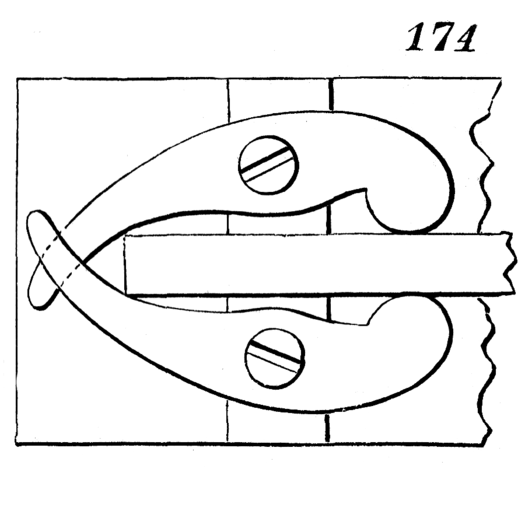
174. Carpenters' bench-clamp. By pushing the clamp between the jaws they are made to turn on the screws and clamp the sides