Movement No. 134 demonstrates one of the simplest and most ancient methods of converting uniform circular motion into rectilinear motion — using a rope or band wound around a rotating drum. As the drum rotates continuously, the rope or band wound around it is either paid out or taken up, causing whatever is attached to the free end to move in a straight line. The rope may be wound once or multiple times around the drum to increase the contact area and prevent slipping. The linear speed of the rope end is directly proportional to the rotational speed of the drum and its diameter — a larger drum or faster rotation produces faster linear motion. This fundamental principle underlies winches, capstans, hoists, elevators, and cable-driven machinery of all kinds, and remains one of the most widely used methods of force and motion transmission in both ancient and modern engineering.
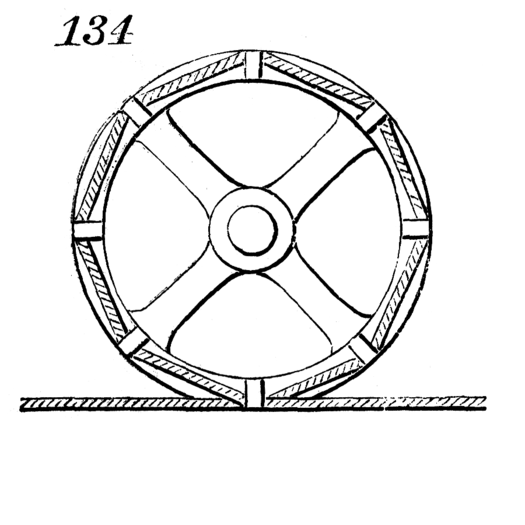
134. Uniform circular motion into rectilinear by means of a rope or band, which is wound once or more times around the drum.