#071 Inner Rim Dual Notch Stud Wheel – 507 Mechanical Movements 3D Animation

#071 Inner Rim Dual Notch Stud Wheel – 507 Mechanical Movements 3D Animation

Monday, Apr 20, 2026

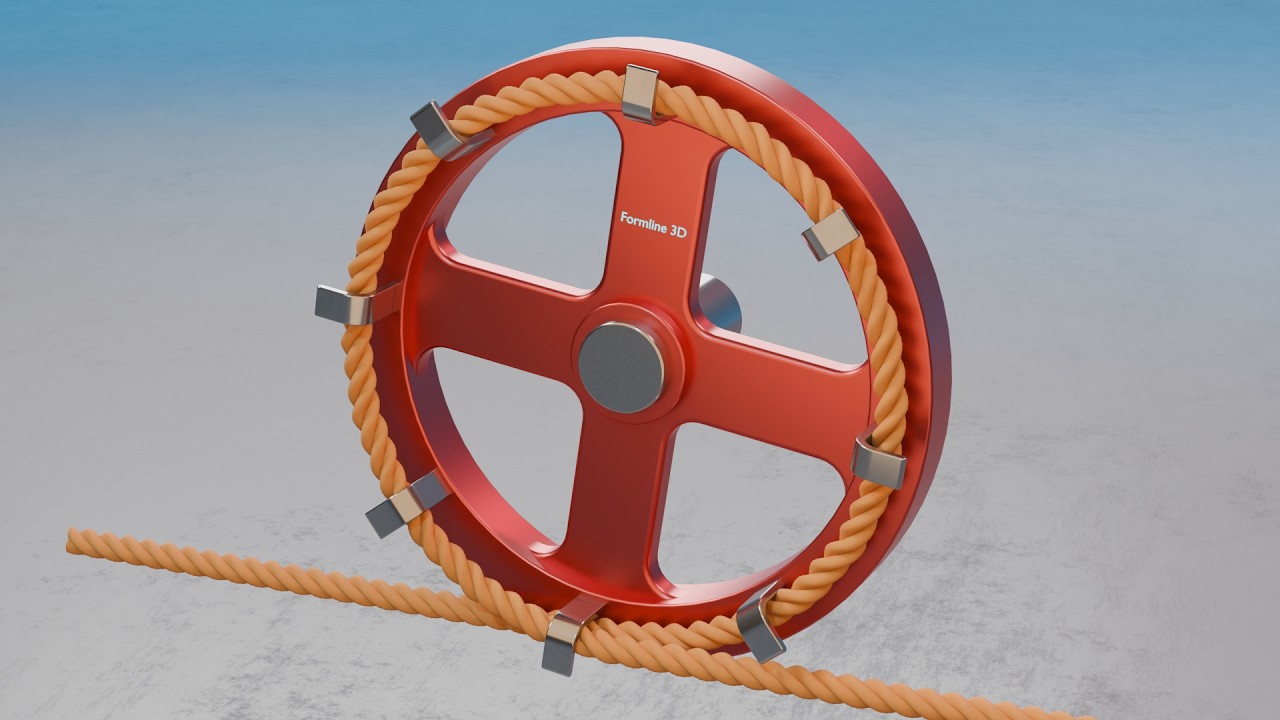
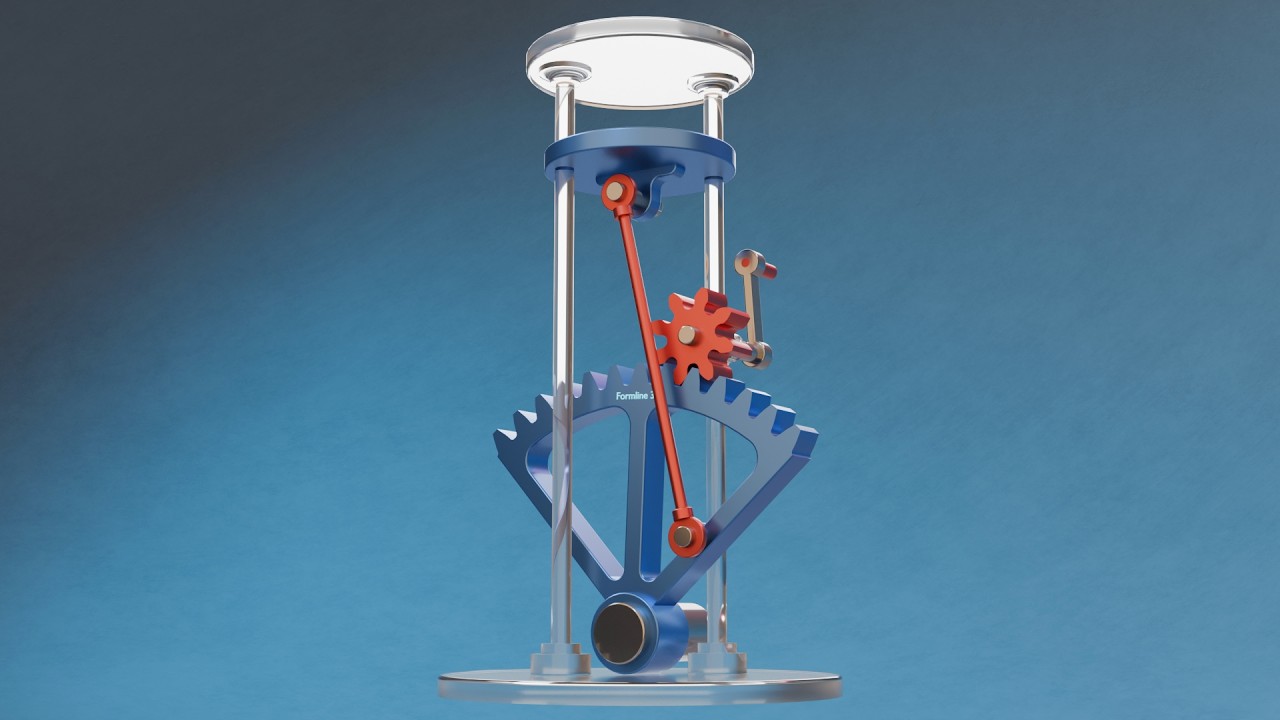
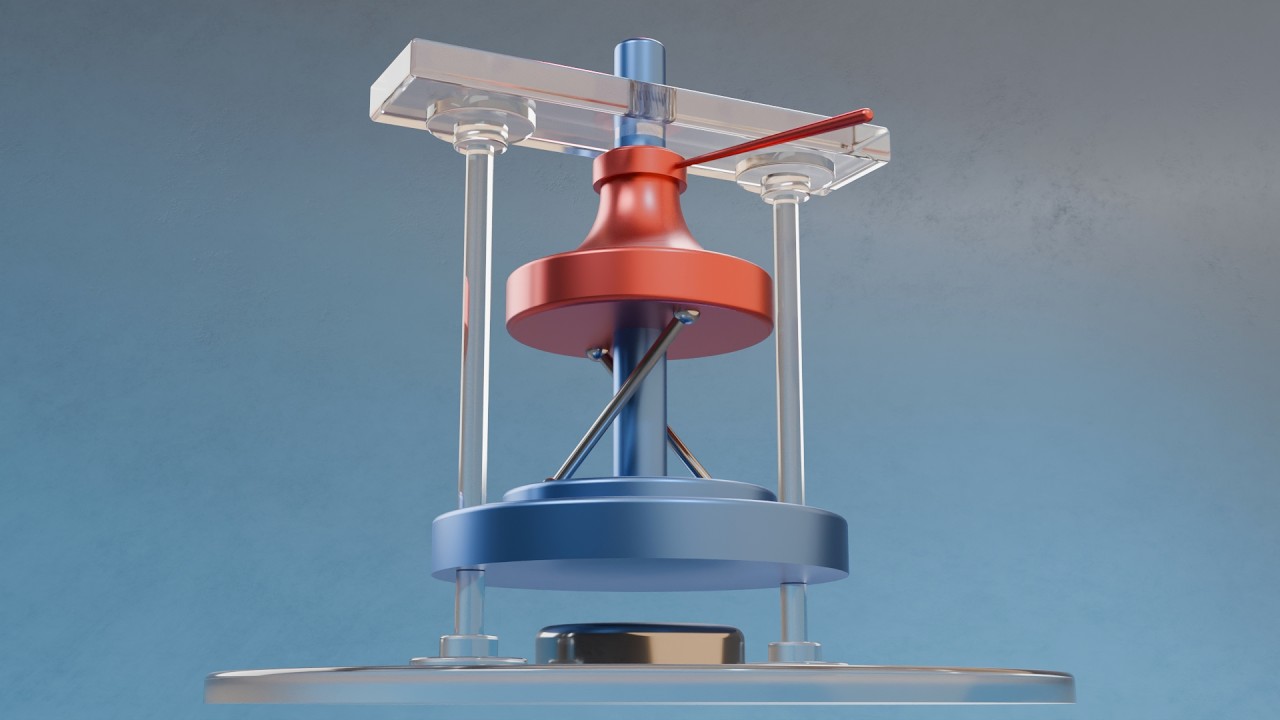
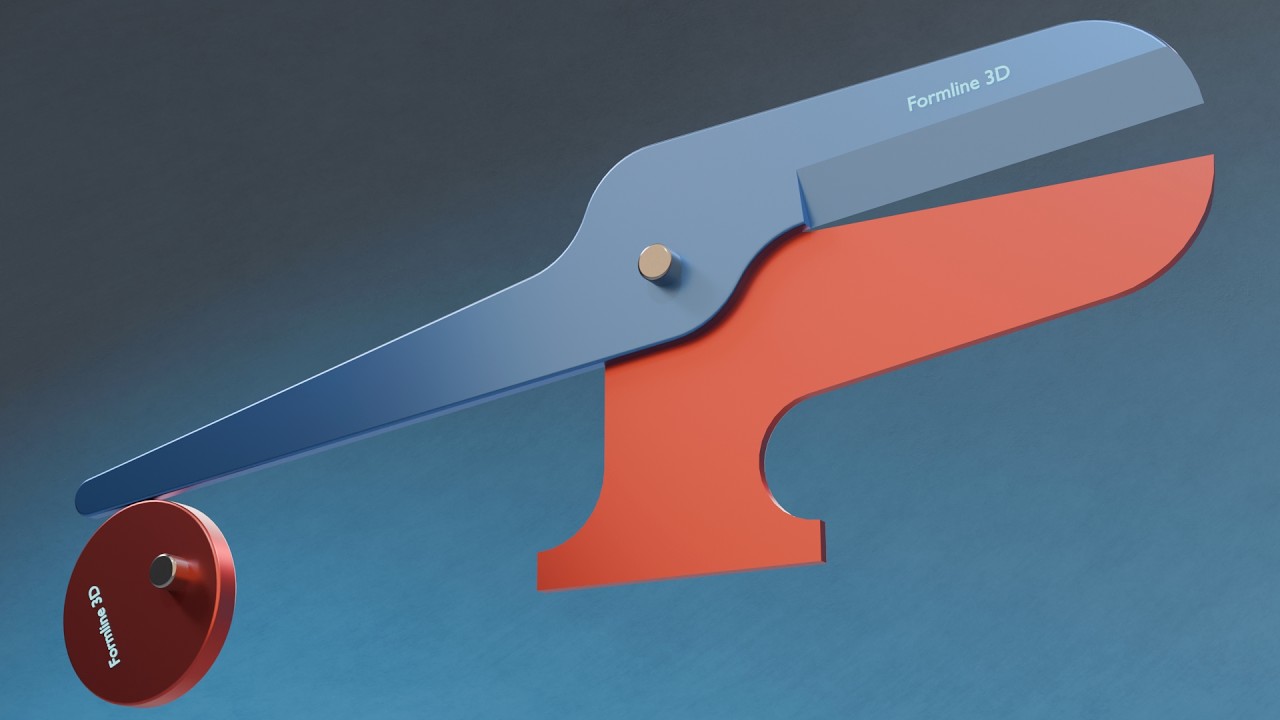
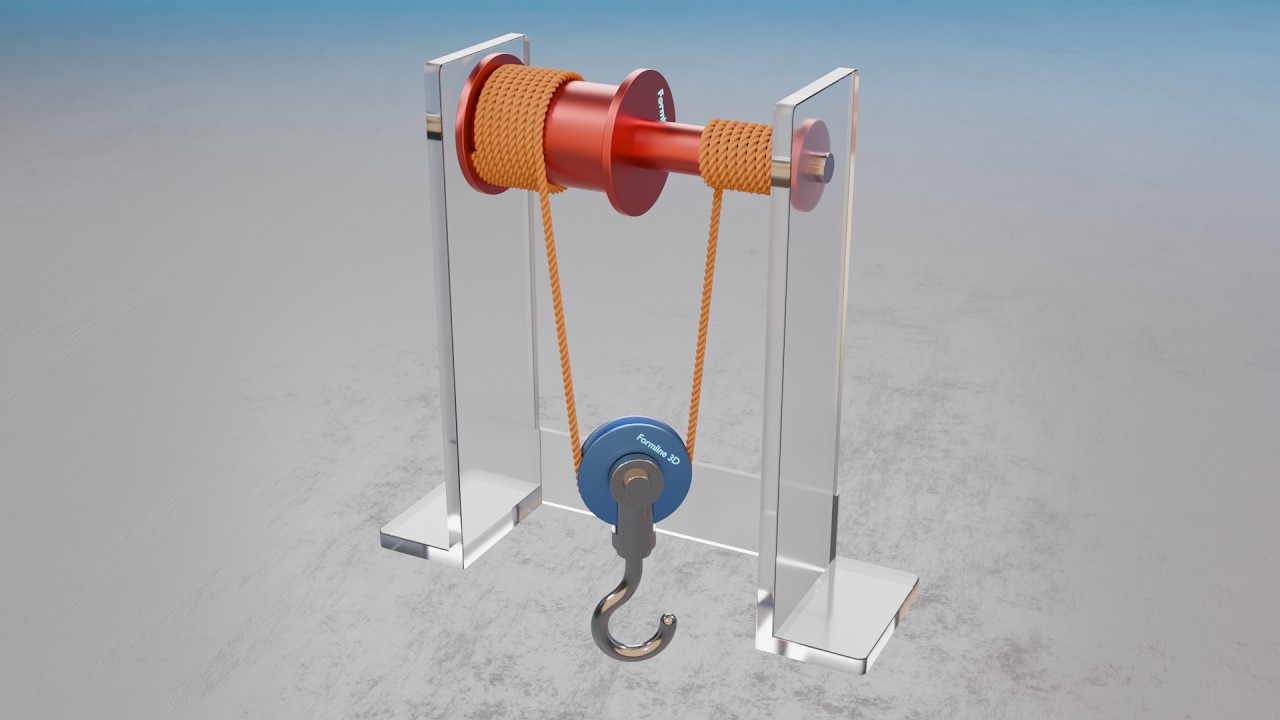
Movement No. 71 presents the most sophisticated of the rim-and-stud intermittent motion family — using the inner circumference of the driving wheel’s rim as the locking surface, combined with two notches (upper and lower) to manage the entry and exit of studs, creating a smooth and precisely controlled intermittent advance. In this arrangement, the driving wheel B has a circular rim whose inner circumference (shown in dotted lines) acts as the locking surface. Two studs of the driven stud wheel C rest against this inner rim at any given moment, held firmly and unable to rotate by the rim’s curved interior surface. The tappet A projects from driving wheel B. Two notches are cut in the rim — one at the top and one at the bottom — positioned precisely relative to the tappet. As driving wheel B rotates, the tappet A strikes one of the studs resting against the inner rim, pushing the stud wheel C forward. As this happens, two simultaneous stud transitions occur through the notches: the stud immediately below the tappet’s target exits through the lower notch, leaving the rim’s enclosure, while a new stud from wheel C enters the rim’s enclosure through the upper notch. With the tappet’s push complete, the two studs now inside the rim rest against its inner circumference and are again locked. This dual-notch entry-and-exit system ensures that at every moment — whether the mechanism is advancing or locked — exactly two studs are always inside the rim, maintaining a balanced, stable, and symmetric locking force. The inner-rim locking geometry distributes the locking load across two contact points simultaneously, making this a stronger and more stable intermittent indexer than the single-surface designs of Movements 68, 69, and 70.

@
2 minute read
#070 Rim and Tappet Stud Wheel – 507 Mechanical Movements 3D Animation

#070 Rim and Tappet Stud Wheel – 507 Mechanical Movements 3D Animation

Sunday, Apr 19, 2026

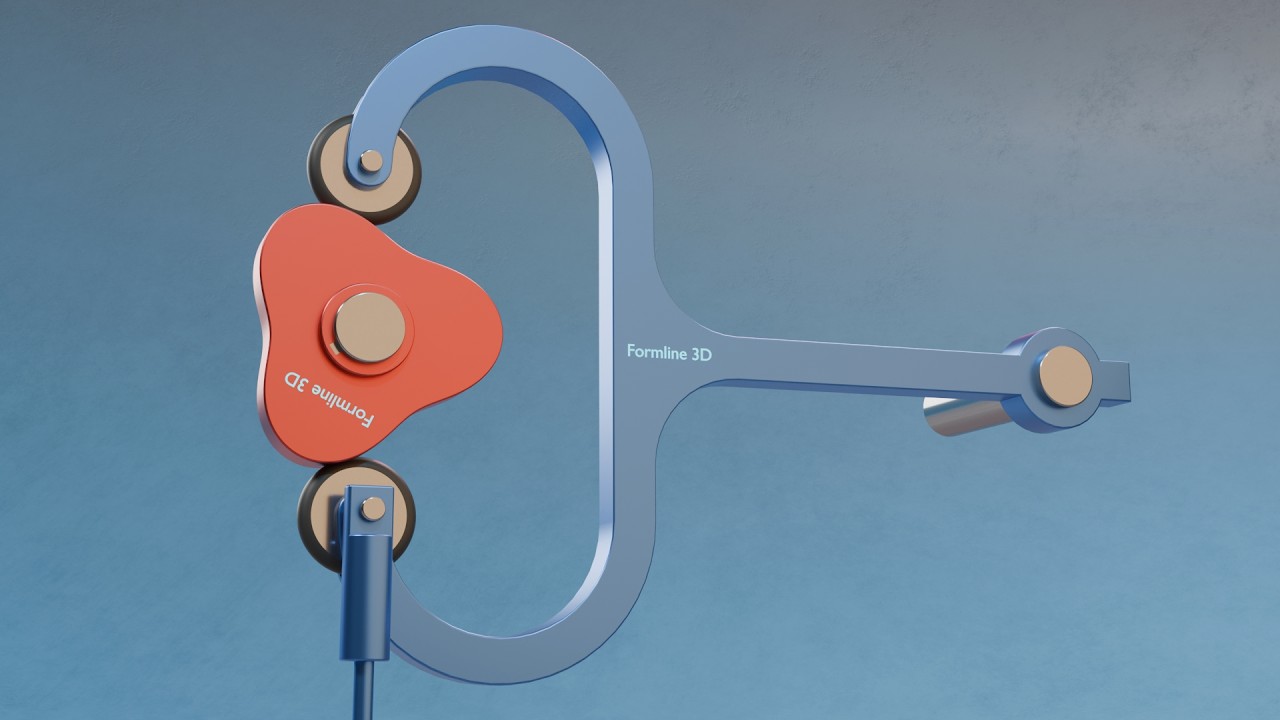
Movement No. 70 presents an elegant refinement of the tappet-and-stud intermittent motion principle — introducing a rim on the driving wheel that serves double duty as both the locking device and the guide for the stud wheel, creating a fully integrated and self-contained intermittent indexing mechanism. The driving wheel C carries two key features: a tappet B projecting from its face, and a circular rim extending around its circumference, shown in dotted outline. The driven wheel A carries a series of studs projecting from its face at equal angular intervals. The rim of wheel C plays the central structural role: its exterior surface acts as a bearing and stop — when the tappet B is not in contact with any stud, the smooth exterior of the rim presses against and holds the studs of wheel A, preventing any rotation. The studs of wheel A are thus pinched and held stationary between the solid rim exterior and their circular path — positively locked in position. A single opening is cut through the rim. This opening is precisely sized to allow exactly one stud to enter and another to exit as wheel C rotates. The tappet B is positioned directly opposite the center of this opening. As wheel C rotates and the opening aligns with the studs of wheel A, two things happen simultaneously: one stud exits through the opening as the previous step’s lock is released, and tappet B — positioned at the opening’s center — engages the entering stud and pushes wheel A forward by one stud-space. As the opening rotates away, the rim’s solid exterior immediately re-engages the studs of A, locking it again. The result is a precisely controlled one-step advance with each revolution of driving wheel C, with smooth, robust locking provided entirely by the rim geometry.

@
2 minute read
#069 Single Tooth Small Driver Wheel – 507 Mechanical Movements 3D Animation

#069 Single Tooth Small Driver Wheel – 507 Mechanical Movements 3D Animation

Saturday, Apr 18, 2026

Movement No. 69 presents a close variation of the self-locking single-tooth intermittent mechanism introduced in Movement No. 68 — but with an important geometric difference that creates a distinct locking action. In both movements, a small driving wheel with a single tooth advances a larger driven wheel one step per revolution. However, while in No. 68 the driven wheel C had smooth concave hollows cut between its notches to receive the smooth body of the driving wheel, in No. 69 the driven wheel A has actual gear teeth around its circumference — and the locking is achieved by the smooth circular body of the small driving wheel B fitting snugly between these teeth. The small wheel B has a single tooth projecting from its otherwise smooth, circular body. As B rotates, its single tooth enters the tooth spaces of the larger wheel A and pushes one tooth forward — advancing wheel A by exactly one tooth-space per revolution of B. During the rest of B’s revolution, its smooth circular circumference enters the gap between two consecutive teeth of wheel A and nests there, physically blocking any further rotation of A. The tooth profile of wheel A and the circular radius of wheel B’s smooth body are matched precisely so that the fit is snug and secure — preventing any accidental movement of the driven wheel between advances. This arrangement differs from No. 68 in that the driven wheel carries conventional teeth rather than specially cut notches and hollows, making wheel A a standard gear wheel that can also mesh with other gears in the system. The mechanism is compact, elegant, and requires no separate detent or lock component — the geometry of the two wheels themselves provides complete intermittent advance and positive locking in a single integrated design.

@
2 minute read
#068 Single Tooth Self-Locking Intermittent Wheel – 507 Mechanical Movements 3D Animation

#068 Single Tooth Self-Locking Intermittent Wheel – 507 Mechanical Movements 3D Animation

Friday, Apr 17, 2026

Movement No. 68 presents a beautifully self-contained intermittent motion mechanism — a single-tooth driving wheel that advances a notched wheel by exactly one notch per revolution, while simultaneously serving as its own locking device without requiring any separate stop mechanism. The driving wheel B has a single tooth A projecting from its otherwise smooth, circular circumference. The driven wheel C has a series of evenly spaced notches cut into its circumference, and between each pair of notches, a hollow or concave recess is cut into the wheel’s surface. The operation is elegant in its simplicity: as driving wheel B rotates, its single tooth A sweeps around until it enters one of the notches of wheel C, pushing it forward by exactly one notch-space — one precise step. The rest of wheel B’s circumference is smooth and circular with no more teeth, so wheel C advances only during the brief interval when tooth A is engaged, and remains stationary for the remainder of the revolution. The ingenious self-locking feature is built into the geometry of both wheels: the smooth circular portions of driving wheel B’s circumference precisely fit into the concave hollows cut between the notches of wheel C. While tooth A is not in engagement — which is most of each revolution — the circular body of wheel B nests snugly into one of these hollows, physically preventing any rotation of wheel C. There is no separate detent, spring, or stop lever needed — the geometry of the two wheels themselves provides complete locking. This self-locking single-tooth mechanism is a direct conceptual relative of the Geneva stop mechanism used in film projectors and precision instruments, offering the same intermittent advance and positive locking through elegant geometric integration.

@
2 minute read
#067 Tumbler Weight Jumping Motion – 507 Mechanical Movements 3D Animation

#067 Tumbler Weight Jumping Motion – 507 Mechanical Movements 3D Animation

Thursday, Apr 16, 2026

Movement No. 67 presents yet another modification of the jumping intermittent motion concept first introduced in Movement No. 64 — this time using a weight or tumbler E secured directly on the hollow shaft, operating in combination with pin C in the worm-gear shaft. Where No. 64 used a spring and specially shaped cam, and No. 66 used a weighted arm attached to the worm-gear shaft, No. 67 takes a different structural approach: the weight or tumbler E is fixed to the hollow shaft itself — the output shaft that carries the intermittent motion. The worm-gear’s pin C interacts directly with this hollow shaft tumbler. As the worm-gear slowly rotates via the worm drive, its pin C engages the tumbler E on the hollow shaft and carries it along, lifting the weight to a position of unstable equilibrium — past the tipping point. At this critical moment, the tumbler and the hollow shaft are free to fall under gravity independently of the worm-gear, snapping forward rapidly until the weight settles at its new lowest position. The hollow shaft thus receives a sudden rapid rotational impulse — the characteristic jumping motion — before coming to rest and waiting for pin C to catch up and restart the cycle. Compared to No. 66, where the weight arm was fixed to the worm-gear shaft and rotated with it, in No. 67 the tumbler is on the hollow shaft — the driven element — giving the output shaft a more direct and vigorous snap action as the tumbler’s own mass drives the output shaft forward during the falling phase. This series of three modifications (No. 64, 66, and 67) elegantly demonstrates how the same snap-action intermittent principle can be realized through spring-cam, weighted drive-shaft arm, and hollow-shaft tumbler configurations respectively.

@
2 minute read
#066 Weighted Arm Worm Gear Jumping Motion – 507 Mechanical Movements 3D Animation

#066 Weighted Arm Worm Gear Jumping Motion – 507 Mechanical Movements 3D Animation

Wednesday, Apr 15, 2026

Movement No. 66 presents a direct and elegant modification of Movement No. 64 — replacing the spring and cam mechanism of that system with a simpler, gravity-based alternative: a weighted arm. In Movement No. 64, a specially shaped cam and a spring worked together to create the snap-action jumping motion — the spring stored energy as the worm-gear’s pin slowly pushed the cam, then released it suddenly when the cam profile caused the spring’s pressure direction to reverse. In No. 66, this complexity is stripped away entirely. Instead, a weight D is fixed to an arm that is secured to the shaft of the worm-gear. As the worm-gear slowly rotates, the arm and weight rotate with it — gravity acting on the weight creates a torque that, depending on the arm’s angular position, either resists or assists the worm-gear’s rotation. The worm-gear’s pin acts against the arm: when the pin pushes the arm upward past the top dead center position (where gravity transitions from resisting to assisting), the weight and arm drop suddenly under gravity — snapping forward independently of the worm-gear until the pin catches up. This produces the same characteristic jumping snap-action output as No. 64, but driven entirely by the potential energy of gravity stored in the raised weight rather than a compressed spring. The weighted arm solution is simpler and more robust — fewer precision components, no spring fatigue concerns — making it well suited for coarser or higher-duty applications where the spring-and-cam elegance of No. 64 is unnecessary. The modification elegantly demonstrates how the same functional result can be achieved through different energy-storage mechanisms: spring potential energy versus gravitational potential energy.

@
2 minute read
#065 Tappet and Stud Wheel Intermittent Motion – 507 Mechanical Movements 3D Animation

#065 Tappet and Stud Wheel Intermittent Motion – 507 Mechanical Movements 3D Animation

Tuesday, Apr 14, 2026

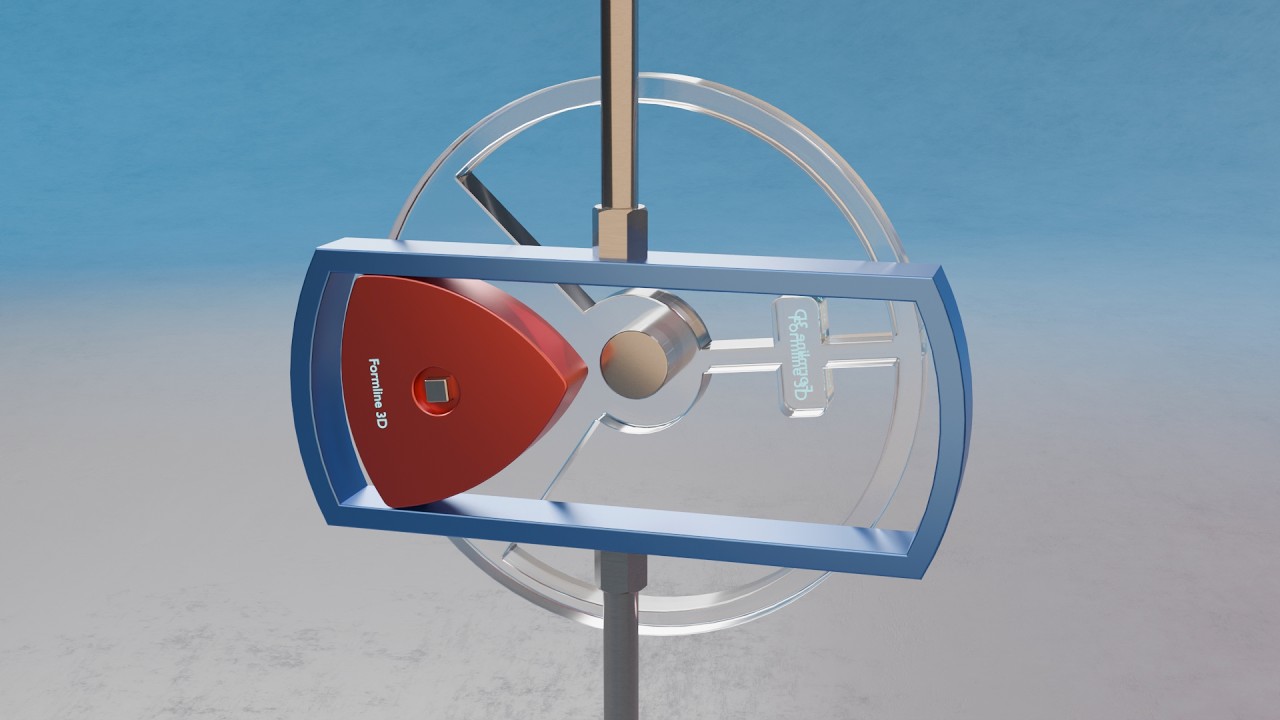
Movement No. 65 presents a precise and elegant intermittent motion mechanism that advances the driven wheel one stud-space per revolution of the driving wheel — using a tappet, a stud wheel, and a lever-lock stop to ensure controlled, exact single-step indexing. The driving wheel C rotates continuously on the left, carrying tappet A fixed to its face — a projecting element that strikes the studs on the driven wheel. The driven wheel D has a series of equally spaced studs projecting from its face around its circumference. Each complete revolution of wheel C causes tappet A to strike one stud on wheel D, pushing it forward by exactly one stud-space — a precise fractional rotation of wheel D. The critical engineering challenge is preventing wheel D from over-rotating beyond one step — and this is where the lever-like stop comes in. A lever is pivoted on a fixed center between the two wheels. When tappet A strikes a stud on wheel D and pushes it, a notch cut in the periphery of driving wheel C aligns with one end of the lever — allowing that end of the lever to enter the notch and freeing the other end to lock between two studs of wheel D, preventing any further rotation. The instant tappet A finishes pushing the stud and leaves it, the notch on wheel C rotates away — its solid periphery presses on the lever’s free end and forces it back out from between the studs of D. This simultaneously prepares the lever to lock D again at the completion of the next tappet stroke. The result is a perfectly synchronized lock-advance-lock cycle: wheel D advances one precise step per revolution of wheel C, then is positively locked until the next advance.

@
3 minute read
#064 Worm Gear Cam Jumping Motion – 507 Mechanical Movements 3D Animation

#064 Worm Gear Cam Jumping Motion – 507 Mechanical Movements 3D Animation

Monday, Apr 13, 2026

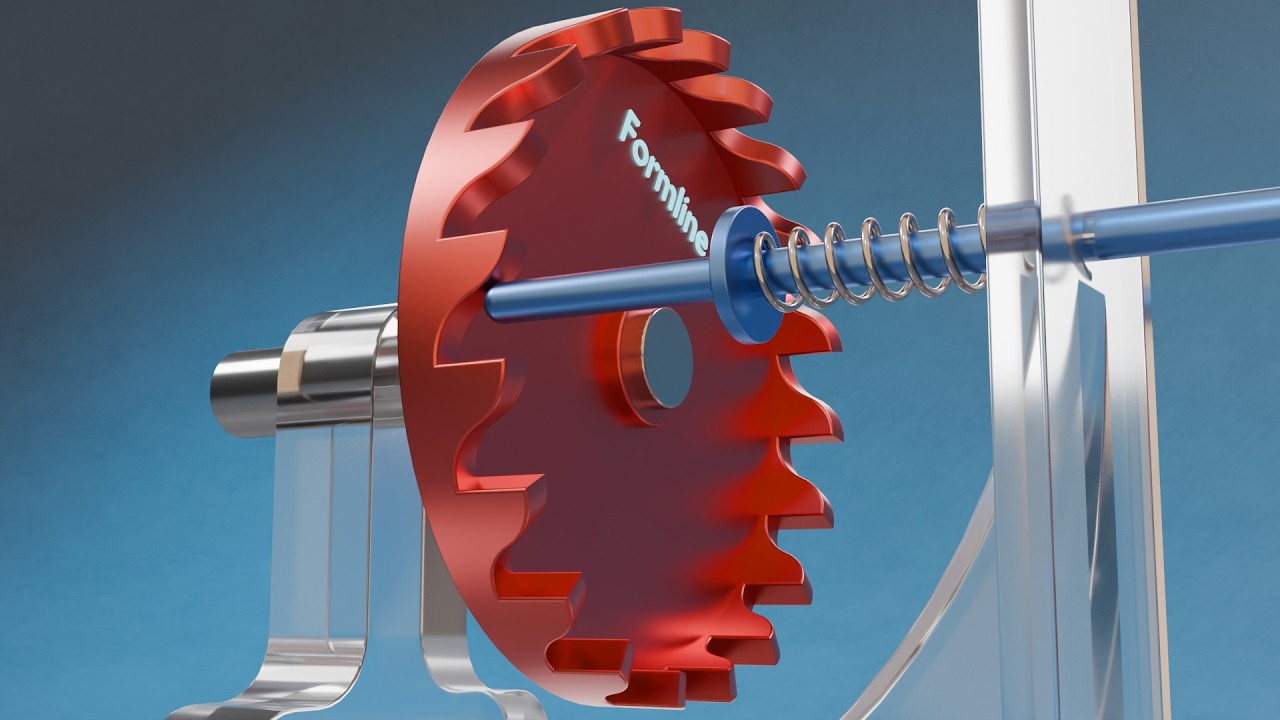
Movement No. 64 presents another ingenious jumping or snap-action intermittent motion mechanism — this time driven by a worm gear and powered by a specially shaped cam and spring combination. The driving shaft at the bottom carries a worm or endless screw that meshes with and continuously drives worm-gear B. Coaxial with the worm-gear shaft is a hollow shaft on which cam A is fixed. A critical detail of this hollow shaft is that a short section of it has been half cut away — creating a notch or recess that interacts with a pin fixed in the worm-gear shaft. The operating principle is as follows: the spring presses continuously against cam A, loading it. As the worm-gear shaft rotates, its pin contacts the notched section of the hollow shaft and pushes the hollow shaft — and with it cam A — along with the worm-gear’s rotation, against the spring pressure. This continues as long as the spring pressure direction keeps the hollow shaft pressed back against the driving pin. However, the peculiar shape of cam A is designed so that as the cam reaches a critical angular position, the direction of the spring’s pressure on the cam suddenly changes — from pushing against the cam’s motion to assisting it. At this tipping point, the cam and hollow shaft are suddenly released from the pin and the spring snaps the cam forward rapidly and independently, while the worm-gear continues its slow steady rotation. The cam snaps to a new resting position and waits there until the worm-gear’s pin catches up to it again, restarting the cycle. This produces a characteristic jumping snap-action output: a period of slow, pin-driven advance followed by a sudden rapid snap, repeating at every worm-gear rotation cycle.

@
2 minute read
#063 Jumping Star Wheel – 507 Mechanical Movements 3D Animation

#063 Jumping Star Wheel – 507 Mechanical Movements 3D Animation

Saturday, Apr 11, 2026

Movement No. 63 presents a beautifully precise intermittent motion mechanism — the jumping star wheel with drop pawl and spring — historically used in meters, revolution counters, and counting devices where a rapid, sharp, and exactly indexed rotary advance is needed once per input cycle. The mechanism has three key components working in sequence. First, a continuously rotating disk on the right carries a series of pins projecting from its face at regular intervals around its circumference. Second, a drop arm is mounted to the left, held up by a spring, with a pawl attached to it that rests in the spaces between the star-wheel’s points. Third, a star-wheel with evenly spaced pointed projections waits to be advanced. The sequence of operation is as follows: as the disk rotates, one of its pins lifts the drop arm — and with it, the attached pawl — upward against the spring force. As the pin continues rotating past the drop arm, the pawl is first released from the pin’s grip and drops into the next space of the star-wheel, positioning itself ready to push. The pin then continues to the drop arm’s catch point and releases it suddenly — the spring violently throws the drop arm downward. The drop arm carries a pin that strikes the pawl, which instantly delivers a sharp, rapid impulse to the star-wheel, advancing it one precise step. The star-wheel then stops and holds its position until the next disk pin repeats the cycle. This snap-action mechanism produces a crisp, well-defined, single-step advance of the star-wheel for each pin on the rotating disk — exactly the sharp, precise indexing needed for reliable digit counting in meters and mechanical counters.

@
2 minute read
#062 Variable Differential Speed Bevel Gear Drive – 507 Mechanical Movements 3D Animation

#062 Variable Differential Speed Bevel Gear Drive – 507 Mechanical Movements 3D Animation

Friday, Apr 10, 2026

Movement No. 62 is a direct and more sophisticated extension of Movement No. 61, introducing the ability to continuously vary the output speed — not just select between two fixed speeds — by replacing the weighted friction-band on the third bevel gear with a fourth pulley actively driven by a separate belt from the upper shaft. The basic architecture is identical to No. 61: three pulleys on the lower shaft (one loose idler, one fast with a bevel gear on its hub, one loose with a transverse bevel gear), plus a third bevel gear interacting with the other two. The crucial difference is that in No. 62, this third bevel gear is now physically attached to a fourth pulley positioned to the right of the other three. This fourth pulley is driven by a separate belt coming from a small pulley on the upper driving shaft — meaning the third bevel gear is no longer passive or friction-held, but actively driven at a controllable speed. The result is a true variable differential drive. When the main left-hand belt engages the middle bevel gear pulley, the differential bevel gear system is active. The output shaft speed now depends on the combination of the main drive and the actively controlled third bevel gear speed. If the fourth pulley’s belt is open (same direction), the third bevel gear’s rotation subtracts from the base double speed — slowing the output. If the fourth pulley’s belt is crossed (opposite direction), the third bevel gear’s rotation adds to the base double speed — increasing the output beyond the base double speed. By varying the speed of the fourth pulley’s drive, or by crossing versus opening its belt, the operator can continuously vary and fine-tune the output shaft speed across a range — making this one of the most sophisticated continuously variable transmission concepts in the entire 507 collection.

@
3 minute read

© 2026 Formline 3D Mechanisms

Powered by Formline 3D

Formline 3D

Formline 3D is a 3D animation channel exploring the form, structure, and design of the world around us.

From everyday objects to complex machines, we use Blender and real-time graphics to visualize how things are built, how they work, and how their shapes come together.

No talking heads. No stock footage. Just carefully crafted 3D animations that turn objects, technology, and ideas into clear visual stories.

If you love design, engineering, products, or simply understanding how things are made — you’re in the right place.